
Choosing an iron grade before defining how a part is loaded can lead to avoidable design changes. A housing exposed to impact, vibration, abrasive material or low temperature environments may have different requirements from a component subject mainly to static loads. Sourcing custom iron parts for agricultural machinery starts with operating conditions and part interfaces, not a general claim about durability.
Uncertainty about loads and service conditions can make material selection difficult. Incomplete drawings or specifications can also lead to revisions during design and production. Start by documenting what the component does, how it connects to surrounding parts and the conditions it must withstand.
This guide explains how to translate machinery use into casting requirements, compare Gray Iron, Ductile Iron and Malleable Iron, and plan production and finishing needs. It also outlines what to include in a project brief, from drawings or CAD files to critical dimensions and service details, to support a clear technical assessment and production discussion.
Key Takeaways
- Understand how design assessment, tooling, molding, pouring, inspection and finishing affect the casting and its requirements.
- Compare Malleable Iron, Ductile Iron and Gray Iron against the component’s specified needs rather than assuming one grade suits every application.
- Include current drawings or CAD files, quantity expectations, material requirements and critical interfaces in your project brief.
- When sourcing custom iron parts for agricultural machinery, include finishing needs early so casting and post-processing can be considered together.
- Use a technical assessment to discuss part feasibility and clarify project requirements with a foundry engineer.
What Makes an Agricultural Machinery Part a Casting Candidate?
Start by matching the component to its operating demands and production requirements. Shape alone doesn’t determine whether casting is suitable. Geometry, connection points, loading and service environment all matter during the design discussion. A bracket mounted near a vibrating assembly, a gearbox housing or a support used on harvesting equipment raises different questions about fit, loads and use. These are illustrative examples of agricultural machinery, not assumptions about a particular component’s requirements.
A custom iron casting is a component produced to a project’s specified geometry and requirements. For custom iron parts for agricultural machinery, provide enough practical information for a foundry engineer to assess the design instead of relying on a broad request for a durable part.
- Function: Describe what the part supports, encloses, guides or connects, and its role in the machinery assembly.
- Interfaces: Identify adjoining parts, mounting points, fasteners, bearing or shaft locations, and surfaces that must align or fit.
- Operating demands: Record known loads, movement, vibration and recurring impacts. Distinguish documented requirements from estimates.
- Service environment: Note exposure to soil, moisture, debris, temperature changes and other relevant conditions.
This information helps frame decisions about geometry and production. It also keeps assumptions, such as estimated loads or presumed fit, from being mistaken for approved design requirements.
Which agricultural machinery requirements belong in the first discussion?
Begin with the component’s function and the parts it must mate with. Identify critical interfaces, including mounting faces, holes, openings and surfaces where alignment matters. Share available measurements and mark the dimensions essential to assembly or operation. If a drawing shows several features but doesn’t identify which are critical, explain their purpose so they can be reviewed in context.
Next, describe expected loading and movement as precisely as the available information allows. Include vibration, repeated motion or impact where relevant, along with known exposure conditions. Label each detail as measured, specified or estimated. This gives the foundry a sound basis for discussion and brings questions requiring engineering review to the surface early.
When should a buyer assess casting feasibility?
Request a technical assessment while the design can still be discussed, especially if the part has complex geometry, precise interfaces or production requirements that may affect its design. A foundry engineer can review the project information and CAD files, assess feasibility and identify details that need clarification. The assessment can also help determine whether the proposed geometry suits a casting approach.
Hollow passages and enclosed cavities deserve attention at this stage. A core, a hardened sand insert used to form hollow sections, may be needed to create internal geometry. Show these features clearly in drawings or CAD files so the engineer can assess how the intended shape relates to the proposed casting. Raising uncertainties early makes the technical discussion more focused before the project advances.
How Iron Casting Design and Production Shape the Part
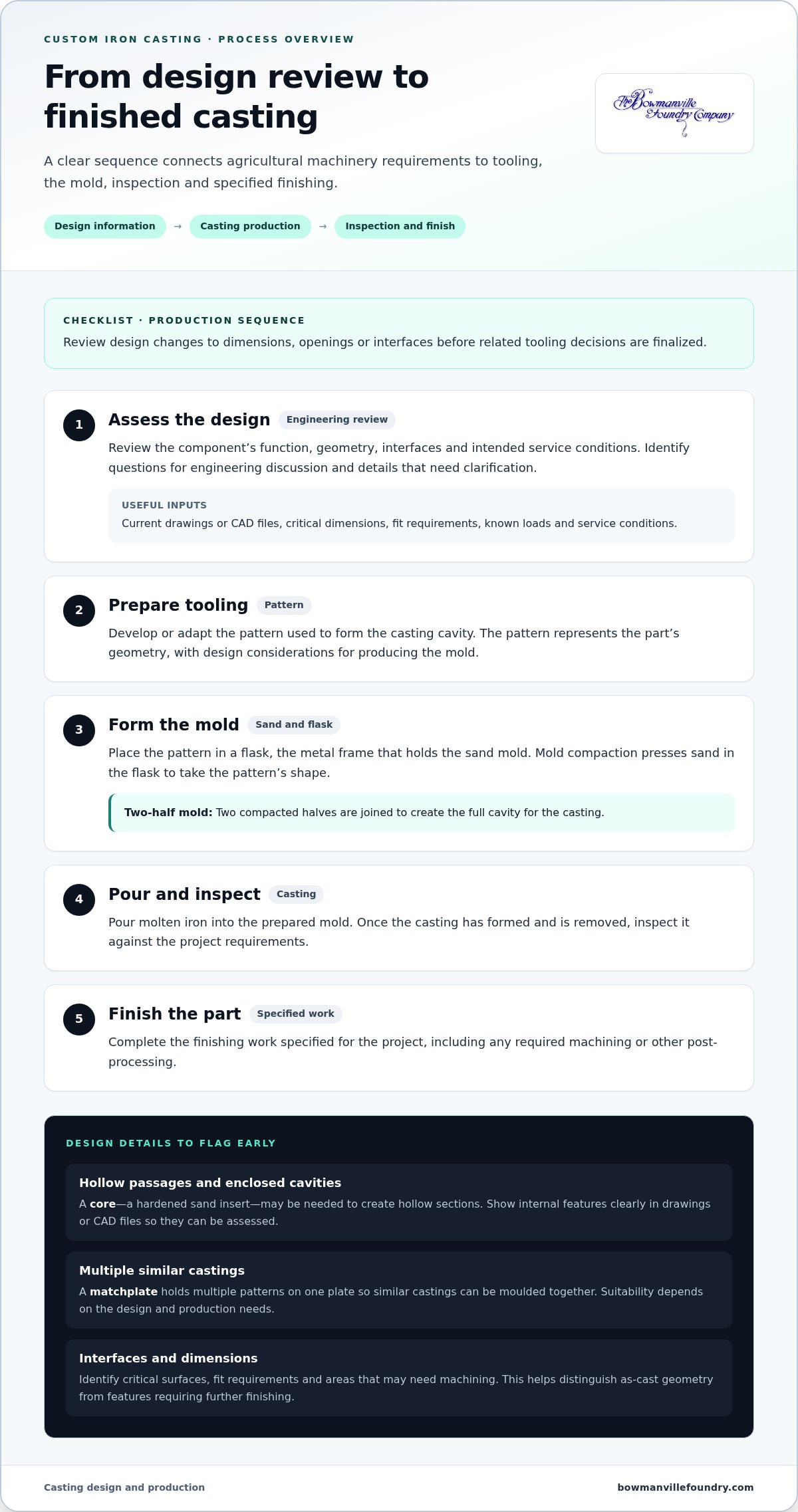
The casting process links the part design to the tooling and mold that form it. For custom iron parts for agricultural machinery, clear design information helps the foundry assess how the geometry will be produced and which details need review before tooling and production decisions are finalized. A change to an interface or cavity can affect the pattern and mold, so raise revisions early rather than treating them as minor production notes.
- Assess the design. Review the component’s function, geometry, interfaces and intended service conditions, then identify questions for engineering discussion.
- Prepare tooling. Develop or adapt the pattern used to form the casting cavity. A pattern represents the part’s geometry, with design considerations for producing the mold.
- Form the mold. Place the pattern in a flask, the metal frame that holds the sand mold. Mold compaction presses sand in the flask to take the pattern’s shape. The resulting two-half mold is formed by joining two compacted halves to create the full cavity.
- Pour and inspect. Pour molten iron into the prepared mold. Once the casting has formed and is removed, inspect it against the project requirements.
- Finish the part. Complete specified finishing work, including any required machining or other post-processing.
A matchplate holds multiple patterns on one plate so similar castings can be moulded together. Its suitability depends on the project’s design and production needs. Review changes to dimensions, openings or interfaces before related tooling decisions are finalized.
What design information helps a foundry assess a casting?
Provide current CAD files and drawings with dimensions and details for interfaces that affect assembly. Mark critical surfaces, fit requirements and areas that may need machining. This helps distinguish as-cast geometry from features requiring further finishing. Include the component’s function and service conditions too: a part name alone may not explain how it operates or which design features matter.
If a revision is underway, identify the current files and describe the changes. This helps the foundry assess the intended design without relying on conflicting versions.
How do patterns, molds, and samples fit together?
The pattern defines the shape that mold compaction transfers into the sand. Once the mold halves are joined, the cavity is ready for pouring. If the design includes a hollow passage, a core is placed in the mold to form that internal space. A core is a hardened sand insert that creates hollow sections within a casting.
Before full production begins, sample approval gives the customer an opportunity to validate a prototype casting against the agreed design requirements. Resolve required changes before proceeding so the approved sample and production information reflect the same design. For a project-specific discussion of iron casting requirements, provide the current drawings and design details.
How to Compare Iron Casting Options for Agricultural Parts
Base material selection on the component’s documented requirements, not a general preference for one grade. For custom iron parts for agricultural machinery, compare the engineering specification with available grade information and discuss gaps through a foundry technical assessment. The component’s function, required performance and service conditions all inform that review.
Casting grade selection should follow the component’s verified requirements, not a universal ranking of iron grades. The comparison below organizes questions for that discussion. It does not assign unverified properties or identify one grade as best for every application.
| Iron grade | Buyer questions for the project review |
|---|---|
| Malleable Iron | Is the component suited to this grade’s stated use for small castings requiring tensile strength and ductility? Which specific requirements must the selected grade meet? |
| Ductile Iron | Does the part’s size and design fit the stated application for medium to large castings? Which documented properties and performance requirements need to be addressed? |
| Gray Iron | Which grade and material requirements does the engineering specification call for? What documented properties should be assessed against the component’s intended function? |
What should buyers compare across iron grades?
Compare documented material properties with the part’s required performance. If the specification calls for high strength, ductility, wear resistance or another property, identify the requirement and its source. Separate mandatory criteria from preferences, and don’t treat a broad grade description as a substitute for a component-specific requirement. A foundry engineer can review the intended grade and clarify what information is needed for a technical assessment.
For background, consult the iron casting grade selection guide alongside the component’s engineering specification. Use the guide to frame questions, then compare the project’s actual requirements with the applicable grade information. This keeps a general material overview from being mistaken for a guarantee of an individual casting’s performance.
How do service conditions change the comparison?
Document operating loads, exposure and any low temperature environments relevant to the application. Service conditions may affect which properties need attention, but don’t establish a grade or guarantee how a part will perform on their own. Record known operating details and distinguish them from estimates that still need engineering review.
In the specification, label each criterion as mandatory or preferred. Include the basis for requirements where available, such as a drawing note or engineering document, and flag unresolved assumptions. The foundry can then assess the part against stated requirements rather than infer them from the machinery type or component name. This makes the grade discussion more precise and aligns material selection with the design and intended use.
What to Include in a Custom Agricultural Casting Request
A useful project brief gives the foundry the information needed to assess the part and identify questions before production decisions are made. Organize the request so design intent, material requirements, quantities and finishing needs are clear. Mark unknowns as items for review rather than leaving them open to interpretation.
Which documents and requirements should the project brief contain?
Use this checklist to assemble a practical request package:
- Part function and service conditions: Describe what the component does and note relevant operating loads, movement, vibration and exposure conditions.
- Current design files: Provide the latest CAD files and drawings, state their revision level, and identify which document governs if versions differ. Include an available sample if it helps explain the intended part.
- Material requirements: Name the required iron grade if specified. Attach the applicable engineering specification and distinguish mandatory properties from preferences.
- Dimensions and interfaces: Identify critical dimensions, mating components, mounting features and fit requirements. Mark surfaces that must align or connect with other parts.
- Quantity expectations: State anticipated order quantities and whether demand is ongoing or occasional, providing context for production planning.
- Inspection expectations: Include specified inspection or documentation requirements and any acceptance criteria in the project documents.
- Finishing operations: Identify surfaces requiring machining and list any required heat treating, surface coating or other post-processing. Reference the relevant drawing or requirement where possible.
For additional project-planning context, consult the Post-Processing Guide when identifying finishing requirements and the Custom Production Engineering Guide when preparing design information. Record relevant needs in the project brief so they can be considered alongside the casting requirements.
How should buyers plan technical review and sample approval?
Use the technical assessment to resolve questions that could affect feasibility or agreed requirements. Clarify conflicting dimensions, machining locations, interface details and whether a material requirement is mandatory. Assign an owner to each open question and record agreed answers in the project documents.
Before a sample is produced, define who will review it and who has authority to approve it. Confirm the drawing revision and acceptance criteria for the review. Sample approval is the customer’s validation of a prototype casting before full production begins. Documenting the decision connects the design intent to the part accepted for production.
To discuss a casting request or arrange a technical assessment, send Bowmanville Foundry your project information, including current drawings and requirements for review.
How Bowmanville Foundry Supports Custom Iron Parts for Agricultural Machinery
Turning a machinery design into a production casting involves more than selecting an iron grade. Bowmanville Foundry produces custom Malleable Iron, Ductile Iron and Gray Iron castings, and provides technical information and assessments to help buyers discuss part feasibility and project requirements. This support connects the component’s design intent with material, casting and finishing considerations.
Bowmanville Foundry has produced iron castings since 1902. Its 38,000 square foot plant supports its foundry operations, and in 1996 it became the first foundry in Canada to achieve ISO certification. These milestones provide context for buyers reviewing the foundry’s experience and quality history.
What support can buyers expect through the project?
A technical discussion can clarify the information needed to assess a custom component, including drawings, intended service conditions, interfaces and material requirements. A foundry engineer can use the project information to conduct a technical assessment and discuss feasibility. Sharing current drawings and identifying open questions helps focus the review on the specific part.
Project needs may extend beyond the casting itself. Bowmanville Foundry provides post-processing services, which can be considered alongside casting requirements when machining or other finishing is specified. For buyers seeking one-stop-shopping, this means the foundry handles casting, post-processing and logistics for the customer. Raising these needs during the project discussion helps align the casting with the finished-component requirements.
Typical lead times are four to eight weeks, depending on current business conditions; tooling can be produced in two to four weeks. These timelines can inform production planning, with actual project schedules depending on the requirements and current conditions.
What is a practical next step for a casting buyer?
Prepare current drawings or CAD files, describe the part’s function and service conditions, and list the required material grade and critical interfaces. Include quantity expectations and any machining or finishing requirements. If information is preliminary, identify it as an estimate or a question for technical review. A clear starting package keeps the discussion focused on project requirements rather than assumptions.
Buyers can also request Bowmanville Foundry’s free Casting Buyer’s Guide for additional support when considering casting requirements and material selection. Use the guide alongside project drawings and the engineering specification, keeping component-specific requirements as the basis for decisions.
To discuss custom iron parts for agricultural machinery, request a technical assessment or arrange a foundry visit by contacting Bowmanville Foundry about your casting project. Sharing design information and service requirements gives the technical discussion a clear starting point.
Move Your Casting Project Forward
A sound sourcing decision gives engineering and procurement a shared basis for action. Turn the part’s operating requirements, material criteria and production details into a project brief that guides technical review and keeps decisions traceable as the design advances. Identify open requirements clearly so they can be addressed before becoming production assumptions.
For custom iron parts for agricultural machinery, put the project information in front of the foundry team and discuss the component’s specific needs. Bowmanville Foundry can help review those requirements through a technical discussion and assessment.
Discuss your agricultural machinery casting requirements with Bowmanville Foundry. A clear project brief gives the next technical conversation a practical starting point and helps move the project forward.
Frequently Asked Questions
Can agricultural machinery parts be made from cast iron?
Yes, cast iron can be used to produce custom components for agricultural machinery. Whether a particular part is suitable depends on its engineering requirements and intended use, not the machine category alone. For example, when replacing a discontinued component, distinguish the original part’s intended function from changes made during repairs or modifications. This helps keep the new casting aligned with the machinery’s design intent.
How do I know whether a part is suitable for custom iron casting?
Consider whether the proposed design, production approach and performance criteria can be defined clearly enough for engineering review. First establish whether the project is a new component or a replacement for an existing part. For a replacement, note changes to the original assembly and whether the existing component still reflects the intended design. This context helps frame feasibility questions without treating the old part as the complete specification.
What information should I send when requesting a custom iron part?
Along with controlled design documents, include context that may not appear in the drawing, such as photographs showing the component installed or marked-up views indicating its orientation. Make clear that images are supplementary and don’t replace dimensional requirements. If documents contain conflicting information, identify the issue rather than silently choosing one interpretation. This helps resolve discrepancies before they become part of the working definition.
What is sample approval in an iron casting project?
Sample approval is the customer’s formal acceptance of a prototype before full production begins. For a useful review, decide in advance which team members provide technical input and who records the final disposition. Where assembly fit matters, review the sample with the relevant mating components or assembly criteria. Document accepted deviations or requested changes so the approval record reflects the part the customer evaluated.
Can a foundry machine a custom iron casting after production?
Yes, Bowmanville Foundry provides post-processing services that include machining. For a clear acceptance basis, distinguish dimensions that apply to the casting before machining from those that apply to the finished component. Identify the reference surfaces used to locate the part during machining and inspection. This helps align the drawing, finishing requirements and final verification, especially when a finished feature must relate to another machined surface.
How long does a custom iron casting project take?
Typical lead times are four to eight weeks, depending on current business conditions, and tooling can be produced in two to four weeks. For planning, distinguish tooling timing from the broader project schedule. Design clarifications, sample review and specified finishing steps can affect the sequence of work. Share required in-service dates and internal approval milestones early, then align the project schedule with current business conditions.
Does Bowmanville Foundry provide a guide for casting buyers?
Yes, Bowmanville Foundry provides a free Casting Buyer’s Guide. Buyers can use it as a reference for internal discussions, helping procurement, design and production teams organize questions before a project review. Keep the guide alongside controlled project documents, and record decisions from those discussions in the specification or meeting notes. This lets general reference material support the project without replacing its approved requirements.
